
In the pantheon of French provincial baking, few dishes capture the essence of high summer quite like the Cherry Clafoutis. Originating from the Limousin region of France, this dessert is a masterclass in rustic elegance—a simple, pancake-like batter poured over a bed of lush, dark cherries and baked until it achieves a puffed, golden-brown crown. It occupies a unique textural space in the culinary world, sitting precisely at the intersection of a creamy flan, a delicate crêpe, and a light-as-air Dutch baby pancake.
The beauty of a clafoutis lies in its unpretentious preparation and high visual reward. While it looks like a sophisticated tart that required hours of labor, it is actually one of the most efficient desserts in the French repertoire. The secret to a world-class clafoutis lies in the emulsion of the batter and the temperature of the fruit. By utilizing a high ratio of eggs to dairy and a hint of almond aromatics, we create a succulent custard that suspends the fruit in a velvet-soft matrix. Whether you are hosting an outdoor garden brunch or seeking a refined conclusion to a summer dinner party, this guide will walk you through the science of the “custard rise” and the professional secrets to achieving a perfectly non-rubbery crumb.

Why You’ll Love This Recipe
- Effortless One-Bowl Preparation: You don’t need a stand mixer or complex pastry skills; a simple whisk and a heavy-bottomed skillet or baking dish are all that’s required.
- The Ultimate Textural Event: You get the contrast of the firm, juicy berries against the silky, “melt-in-your-mouth” custard base.
- Sophisticated Flavor Profile: By using almond extract and dark sweet cherries, we create a flavor profile that is floral, nutty, and only moderately sweet.
- Naturally Dramatic Presentation: As the clafoutis emerges from the oven, it boasts a magnificent, temporary puff that makes for a stunning table reveal.
- Versatile Serving Options: It is one of the rare desserts that tastes equally divine when served piping hot, at room temperature, or even chilled the next morning for breakfast.
Ingredient Notes & Pro Selections
The quality of your fruit and the fat content of your dairy will define the final gourmet outcome of your clafoutis.
The Cherries
- Fresh vs. Frozen: While fresh sweet cherries (like Bing or Rainier) are the gold standard, high-quality frozen cherries can be used. If using frozen, do not thaw them first; adding them frozen prevents the juices from “bleeding” and turning your custard gray.
- The Pitting Debate: Traditionally, French purists bake clafoutis with the cherry pits intact. The pits contain a chemical called amygdalin, which releases a subtle almond-like aroma during the bake. However, for modern safety and ease of eating, we recommend pitting the cherries but adding a drop of almond extract to mimic that traditional profile.
The Custard Base
- Whole Milk and Heavy Cream: For the most luxurious mouthfeel, use a 50/50 blend. Using only skim or low-fat milk will result in a watery, “bready” texture that lacks the characteristic silkiness.
- Unsalted European Butter: We use melted butter not just in the batter, but to grease the pan. European-style butter (like Kerrygold) adds a toasted, shortbread-like aroma to the bottom crust.
- Almond Extract: This is the “secret” ingredient that elevates a simple custard into a gourmet French dessert. It reinforces the stone-fruit notes of the cherries.
The Dry Foundation
- All-Purpose Flour: A small amount is used to provide just enough structure to hold the fruit in suspension.
- Granulated Sugar: Provides the necessary sweetness while allowing the fruit’s natural acidity to shine.
The Science of the Clafoutis Rise
To achieve professional-grade results, one must understand the chemistry of a custard bake. A clafoutis is essentially a “high-hydration” batter.
- Egg Protein Coagulation: As the dish heats, the egg proteins begin to bond and trap air and steam. This is what causes the spectacular “puff” in the oven.
- Starch Hydration: Because the batter is thin, the flour needs time to absorb the liquid. Letting the batter rest for 10 minutes before pouring ensures a smoother, less “grainy” texture.
- The “Seared” Base: By pouring a small amount of batter into a hot, buttered pan and letting it “set” on the stove for a minute before adding the fruit, you create a foundation that prevents the cherries from sticking to the bottom and ensures a clean slice.
Step-by-Step Instructions
Step 1: Prep the Oven and Pan
Preheat your oven to 375°F (190°C). Generously grease a 9-inch cast-iron skillet, a porcelain tart dish, or a deep-dish pie plate with 1 tablespoon of softened butter.
- The Sugar Dust: Sprinkle 1 tablespoon of granulated sugar over the buttered pan and tilt it to coat the bottom and sides. This creates a beautiful, caramelized “crunch” on the exterior of the dessert.
Step 2: Prepare the Cherries
Wash and pit 1 lb of fresh cherries (approx. 3 cups). Arrange them in a single, crowded layer at the bottom of your prepared dish. They should cover the entire surface.
Step 3: Whisk the Liquid Emulsion
In a large mixing bowl, whisk together 3 large eggs and 1/2 cup of granulated sugar until pale and slightly frothy. Slowly whisk in 1 cup of whole milk, 1/2 cup of heavy cream, 1 teaspoon of vanilla extract, 1/4 teaspoon of almond extract, and 3 tablespoons of melted butter.
Step 4: Fold in the Dry Ingredients
Sift 2/3 cup of all-purpose flour and a pinch of salt into the wet ingredients. Whisk gently until the batter is smooth and resembles the consistency of heavy cream. Let the batter rest for 10 minutes at room temperature.
Step 5: The Pour and Bake
Slowly pour the batter over the cherries. Ensure the fruit is evenly distributed. Place the dish in the center of the oven and bake for 35 to 45 minutes.
- The Visual Cue: The clafoutis is done when the edges are deep golden-brown and puffed, and the center is set but still has a very slight “wobble” when the pan is gently shaken.
Step 6: The Final Garnish
Remove from the oven. The clafoutis will be very high but will deflate as it cools—this is normal and part of its rustic charm. Let it rest for at least 15 minutes. Just before serving, use a fine-mesh sieve to dust the top generously with powdered sugar.
Secrets to a Succulent French Clafoutis
- Don’t Over-Whisk: Once you add the flour, whisk only until the lumps disappear. Over-mixing activates the gluten, which will turn your delicate custard into a rubbery, tough pancake.
- Temperature Management: Ensure your eggs and milk are at room temperature. Cold ingredients will cause the melted butter to seize and clump, resulting in an uneven bake.
- The Skillet Trick: For the absolute best edges, use a Cast-Iron Skillet. The heavy metal retains heat and creates a superior crust that porcelain cannot match.
- Acid Balance: If your cherries are exceptionally sweet, add 1 teaspoon of fresh lemon juice to the batter to brighten the flavor and cut through the richness of the cream.
Variations and Substitutions
- Flaugnarde (The Non-Cherry Version): In France, if you use any fruit other than cherries (like peaches, plums, or pears), the dish is technically called a Flaugnarde. Use the same batter base for any seasonal stone fruit.
- Boozy Infusion: Toss the cherries in 2 tablespoons of Kirsch (cherry brandy) or Amaretto for 30 minutes before baking for an adult-only gourmet twist.
- Berry Medley: Replace the cherries with a mix of blackberries and raspberries. Note that berries release more juice, so you may need to add an extra tablespoon of flour to the batter.
- Gluten-Free: Substitute the all-purpose flour with a high-quality 1:1 gluten-free baking blend. Because the ratio of flour is so low, this recipe adapts exceptionally well to GF flours.
Storage and Shelf Life
- Best Served Warm: Clafoutis is at its peak about 20 minutes after it leaves the oven.
- Refrigerator: Store leftovers in an airtight container for up to 3 days.
- The “Morning After” Trick: Cold clafoutis is a revelation. It becomes denser and more like a cold flan, making it a sophisticated breakfast option with a cup of espresso.
- Do Not Freeze: The high egg and dairy content will cause the custard to separate and become watery upon thawing.
FAQ
Why is my clafoutis rubbery? This is almost always due to over-mixing the flour or over-baking. Remove the dish from the oven as soon as the center is set to maintain the “melt-in-your-mouth” texture.
Do I have to pit the cherries? Traditional French recipes say no, but for a stress-free eating experience, we recommend it. If you pit them, just be sure to use almond extract to replace the flavor lost from the seeds.
Can I use a different sweetener? Honey or maple syrup can be used, but they will alter the color of the custard and make the edges darken faster. If using liquid sweeteners, reduce the milk by 1 tablespoon.
What is the best way to prevent sticking? The combination of butter and a dusting of granulated sugar (Step 1) creates a “non-stick” caramelized barrier that is much more effective than flour or spray.
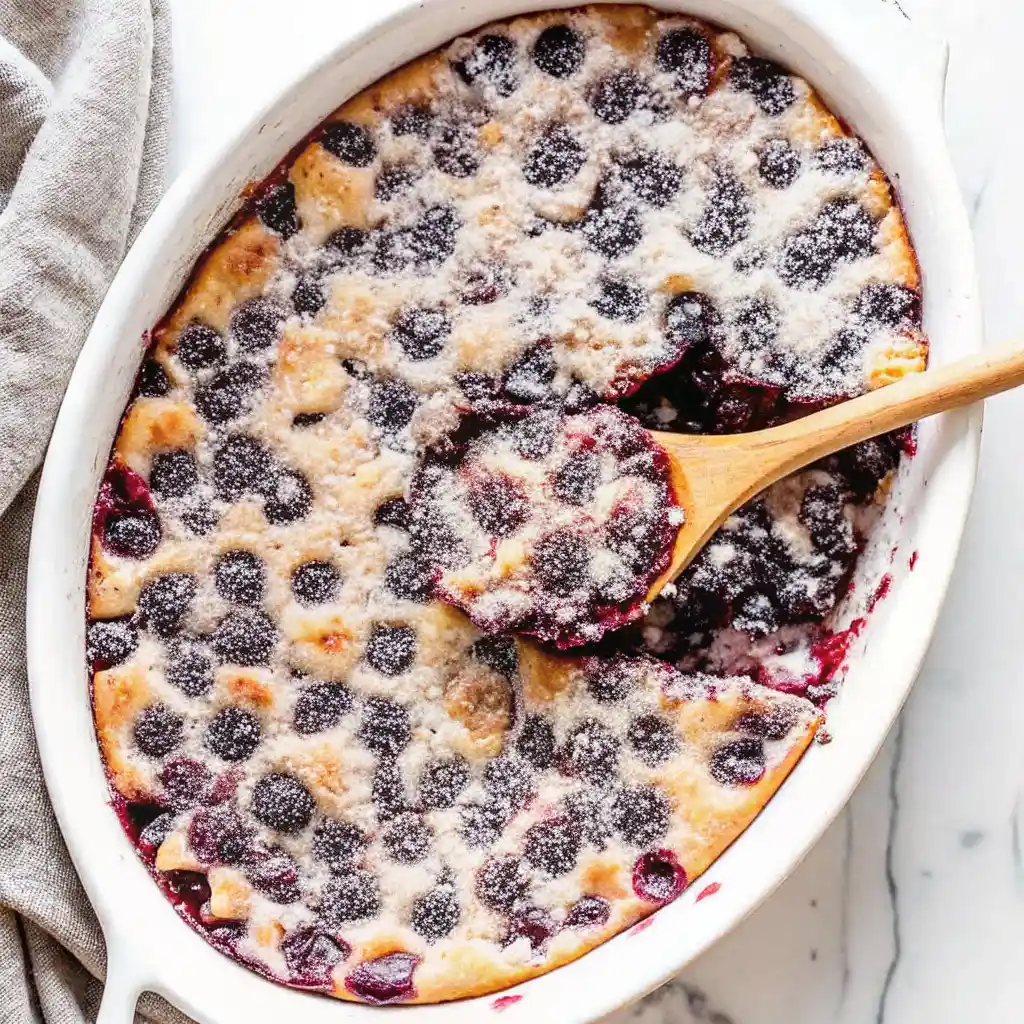
Classic French Cherry Clafoutis
Ingredients
- 1 lb Fresh Cherries, pitted
- 1 tbsp Granulated Sugar (for pan dusting)
- 1 tbsp Unsalted Butter, softened (for greasing pan)
- 1 cup Whole Milk
- 1/2 cup Heavy Cream
- 1 tsp Vanilla Extract
- 1/4 tsp Almond Extract
- 3 large Eggs
- 1/2 cup Granulated Sugar
- 2/3 cup All-Purpose Flour
- 1 pinch Fine Sea Salt
- 1 tbsp Melted Butter
Instructions
- Preheat your oven to 375°F (190°C). Grease a 9-inch cast-iron skillet, porcelain tart dish, or deep-dish pie plate with 1 tablespoon of softened butter. Sprinkle 1 tablespoon of granulated sugar over the buttered pan, tilting it to coat the sides and bottom.
- Wash and pit 1 lb of fresh cherries. Arrange them in a single layer at the bottom of your prepared dish, ensuring they cover the entire surface.
- In a large mixing bowl, whisk together 3 large eggs and 1/2 cup of granulated sugar until pale and slightly frothy. Slowly whisk in 1 cup of whole milk, 1/2 cup of heavy cream, 1 teaspoon of vanilla extract, 1/4 teaspoon of almond extract, and 3 tablespoons of melted butter.
- Sift 2/3 cup of all-purpose flour and a pinch of salt into the wet ingredients. Whisk gently until smooth and resembling the consistency of heavy cream. Let the batter rest for 10 minutes at room temperature.
- Slowly pour the batter over the cherries, ensuring even distribution of the fruit. Place the dish in the center of the oven and bake for 35 to 45 minutes. The clafoutis is done when the edges are golden-brown and puffed, and the center has a slight wobble when shaken.
- Remove from the oven and let the clafoutis rest for 15 minutes. The dessert will deflate slightly as it cools. Before serving, dust generously with powdered sugar using a fine-mesh sieve.