
In the landscape of seasonal culinary traditions, few dishes carry the weight of history and comfort quite like Corned Beef and Cabbage. While often associated with the boisterous celebrations of St. Patrick’s Day, this meal is a masterclass in the “low and slow” cooking philosophy—a method that transforms one of the toughest cuts of beef into a succulent, fork-tender masterpiece. This isn’t just a boiled dinner; it is a symphony of briny aromatics, earthy root vegetables, and a sharp, creamy horseradish sauce that cuts through the richness of the meat.
The secret to a world-class corned beef experience lies in the management of time and the sequence of ingredients. Many home cooks fall into the trap of adding everything to the pot at once, resulting in overcooked, gray vegetables and meat that is either rubbery or dry. This guide utilizes a “staggered-boil” technique, ensuring the beef has the hours it needs to melt its connective tissues while the cabbage and potatoes maintain their structural integrity and vibrant flavor. Whether you are hosting a festive Irish gathering or seeking a soul-warming Sunday supper, this recipe delivers a restaurant-quality experience that celebrates the art of the simmer.

Why You’ll Love This Recipe
- Unrivaled Tenderness: By following the specific simmering timelines, you achieve a brisket that literally pulls apart with a fork, avoiding the “chewy” texture common in rushed versions.
- The “Secret” Horseradish Sauce: While the beef is the star, the homemade creamy horseradish sauce is the supporting actor that steals the show, providing a sophisticated, acidic “ping” that elevates the entire plate.
- One-Pot Efficiency: The entire meal—meat, starch, and greens—is prepared in a single large vessel, making cleanup incredibly manageable for a feast of this scale.
- Perfect for Large Groups: This recipe is designed to feed a crowd, and the leftovers are arguably even better, forming the foundation for world-class Reuben sandwiches the next day.
- Balanced Flavor Profile: We utilize a specific blend of pickling spices and aromatics (onions, garlic, and peppercorns) to ensure the broth is deeply savory rather than just salty.
Ingredient Notes & Pro Selections
The difference between a “good” corned beef and a “Gourmet” one depends entirely on the cut of meat and the freshness of your aromatics.
The Beef (The Brisket)
- Point Cut vs. Flat Cut: This is the most important decision you will make at the butcher counter.
- The Point Cut (Recommended): This is the thicker, fattier end of the brisket. It is more irregular in shape but contains significantly more intramuscular fat (marbling). This fat renders during the long simmer, resulting in a much juicier, more succulent final product.
- The Flat Cut: This is leaner and more uniform in shape. It is easier to slice into perfect, clean rectangles for presentation, but it is much more prone to drying out.
- The Spice Packet: Most corned beef comes with a small packet of pickling spices. While we use this as a base, we recommend adding extra whole peppercorns and bay leaves to “boost” the aromatic profile.
The Staggered Vegetables
- Cabbage: Use a large head of green cabbage. Avoid red cabbage, as it will dye your entire pot a murky purple. Cutting the cabbage into thick wedges (keeping the core intact) ensures the leaves stay together during the boil.
- Potatoes: Red-skinned or Yukon Gold potatoes are the “Gourmet” choice. They are waxy enough to hold their shape and won’t turn into mashed potatoes in the broth.
- Carrots: Buy whole, large carrots and peel them yourself. The small “baby carrots” found in bags lack the deep, earthy sweetness needed to balance the salty brine.
The Game-Changing Sauce
- The Creamy Base: A combination of full-fat sour cream and a touch of mayonnaise creates the velvety texture.
- Prepared Horseradish: Use a high-quality jar of “extra hot” horseradish. This provides the nasal-clearing spice that makes the dish feel authentic.
- Apple Cider Vinegar & Dijon: These provide the necessary acidity and a sophisticated back-note of mustard.
The Science of the Simmer: Why “Low and Slow” Wins
To achieve professional-grade results, one must understand what happens inside the pot. Corned beef is a cured brisket, a muscle that is full of tough connective tissue called collagen.
- Collagen Conversion: At temperatures between 160°F and 180°F, collagen begins to dissolve into gelatin. Gelatin is what gives the meat its “succulent” mouthfeel and prevents it from feeling dry despite the long cook time.
- The “Boil” Danger: Never let your pot reach a violent, rolling boil. High heat causes the muscle fibers to contract and squeeze out all their moisture, leading to “stringy” and tough meat. A gentle simmer (small bubbles breaking the surface) is the scientific requirement for success.
- The Osmosis Balance: Cured beef is naturally very salty. By simmering it in a large volume of liquid with aromatics, you are drawing out the excess salt while simultaneously infusing the meat with the flavor of the spices.
Step-by-Step Instructions
Step 1: Rinse and Prep
Remove the corned beef from its packaging and rinse it thoroughly under cold water.
- The “Salt-Control” Secret: Rinsing removes the excess surface brine and prevent the final broth from being overwhelmingly salty. Place the beef in a very large Dutch oven or stockpot (at least 8-quart capacity).
Step 2: Build the Aromatic Broth
Add the pickling spice packet, 1 halved yellow onion, 4 smashed garlic cloves, and 3 bay leaves to the pot. Cover the meat with enough water (or a mix of water and beef broth) so that it is submerged by at least 2 inches.
Step 3: The Long Simmer
Bring the liquid to a boil, then immediately reduce the heat to low. Cover with a tight-fitting lid. Let the beef simmer for 2.5 to 3 hours.
- The Rule of Thumb: Plan on about 45–50 minutes of simmering per pound of meat.
Step 4: The Vegetable Stagger (The Secret Step)
About 30 minutes before the beef is finished, add the halved potatoes and thick-sliced carrots to the pot. Once the beef is tender (pierced easily with a fork), remove the beef to a cutting board and cover tightly with foil to rest. Add the cabbage wedges to the bubbling broth. Increase the heat slightly and simmer the vegetables for another 15–20 minutes until the cabbage is tender but still has a slight “snap.”
Step 5: Master the Horseradish Sauce
While the vegetables finish, whisk together the sour cream, mayonnaise, horseradish, Dijon mustard, and apple cider vinegar in a small bowl. Season with salt and plenty of cracked black pepper. Let it sit for 10 minutes to allow the flavors to meld.
Step 6: The Precision Slice
Remove the vegetables from the pot using a slotted spoon. Find the “grain” of the beef (the direction the muscle fibers are running). Using a sharp carving knife, slice the beef against the grain into 1/2-inch thick slices.
- Pro Tip: Slicing against the grain shortens the fibers, making every bite feel significantly more tender.
Step 7: Serve
Arrange the sliced beef in the center of a large platter, surrounded by the colorful carrots, potatoes, and cabbage. Drizzle a few spoonfuls of the hot cooking liquid over the meat to keep it moist and serve the horseradish sauce on the side.
Secrets to a Pro-Level Corned Beef
- The Resting Period: Never slice the beef the second it comes out of the pot. Let it rest for at least 15–20 minutes. This allows the juices to redistribute so they stay inside the meat rather than running out onto the board.
- Beer Infusion: For a deeper, malty flavor, replace 12 oz of the simmering water with a bottle of Irish Stout (Guinness). The sugars in the beer help caramelize the exterior of the meat.
- Avoid the “Gray” Look: If your meat looks a bit pale, you can place the sliced brisket under the broiler for 2–3 minutes with a light brush of honey or glaze to give it a “roasted” golden finish.
- Acidity Management: If the broth tastes flat, add a tablespoon of apple cider vinegar in the final 20 minutes of cooking. Acid acts as a flavor enhancer for the salty beef.
Variations and Substitutions
- Slow Cooker (Crockpot) Method: Place everything except the cabbage in the slow cooker. Add 4 cups of water. Cook on Low for 8–10 hours. Add the cabbage in the final 45 minutes on the High setting.
- Instant Pot Method: Pressure cook the beef and aromatics with 4 cups of liquid for 70–80 minutes (depending on weight). Natural release for 15 minutes. Remove meat, add veggies, and manual cook for 4 minutes.
- Spicy Mustard Glaze: Instead of horseradish sauce, whisk together 1/2 cup brown sugar and 1/4 cup stone-ground mustard. Brush on the beef and bake at 400°F for 10 minutes before slicing.
- The “Hoppin’ John” Fusion: Serve the leftovers over white rice with a splash of the pot liquor for a Southern-Irish hybrid meal.
Storage and Reheating
- Refrigerator: Store leftovers in an airtight container for up to 4 days. Keep some of the cooking liquid with the beef to prevent it from drying out in the fridge.
- The Reheat: Do not microwave a large piece of beef. To maintain the succulent texture, reheat slices in a skillet over low heat with a few tablespoons of the broth until just warmed through.
- Freezing: You can freeze the sliced beef for up to 2 months. We do not recommend freezing the boiled cabbage or potatoes, as they will become watery and mushy upon thawing.
FAQ
Why is my corned beef tough? It either didn’t cook long enough, or it was boiled too vigorously. Brisket needs time at a low temperature to melt the collagen. If it’s tough, put it back in the simmer for another 30 minutes.
My corned beef is too salty! How can I fix it? If you taste the broth halfway through and it is overwhelmingly salty, discard half the liquid and replace it with fresh water or unsalted beef broth. Adding a raw potato to the pot can also help “absorb” some of the excess salt.
What is the “grain” and how do I find it? Look at the meat and see which way the long lines (fibers) are pointing. You want to cut perpendicular to those lines. If you cut with the lines, the meat will be stringy and hard to chew.
Can I use a different type of cabbage? Green cabbage is the standard because it holds its structure. Savoy cabbage is a beautiful “Gourmet” alternative with crinkled leaves that catch the sauce beautifully.
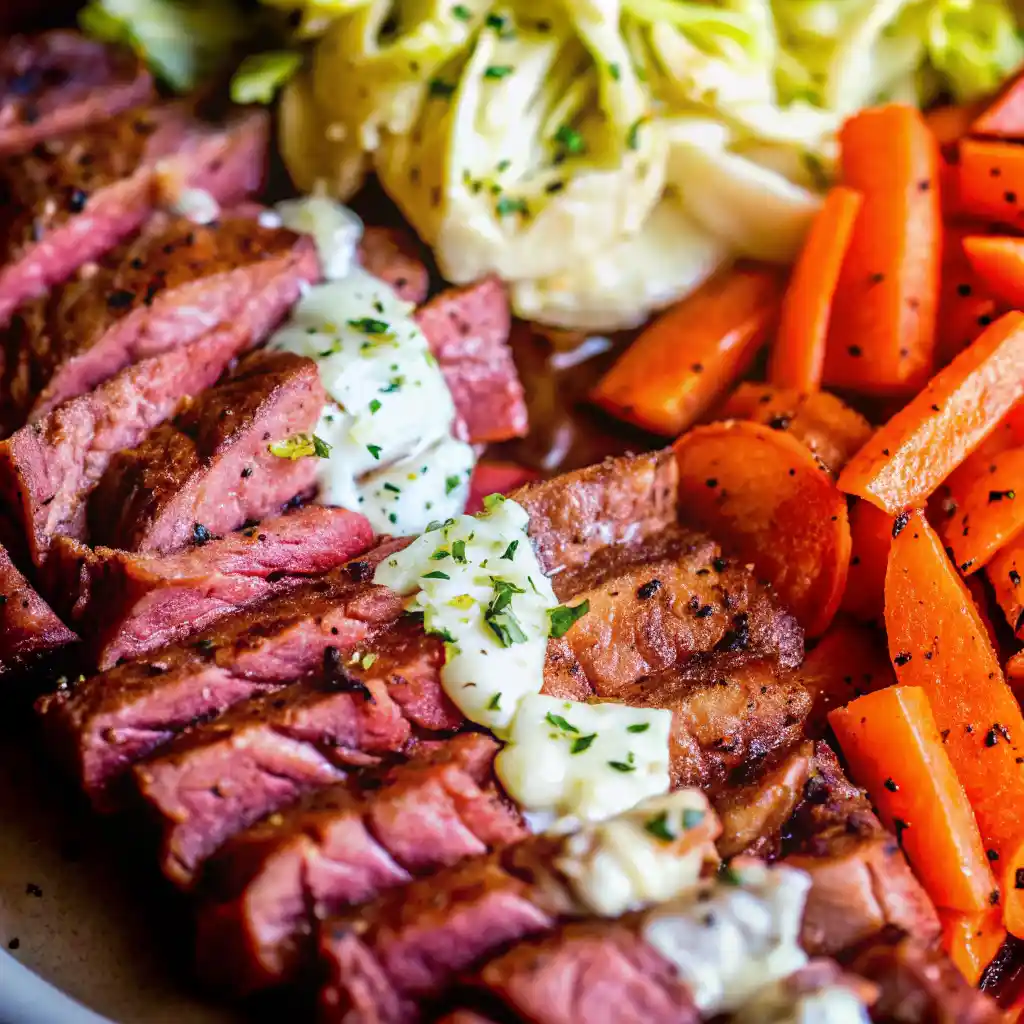
Authentic Corned Beef and Cabbage (The Ultimate Tender Brisket & Horseradish Sauce Recipe)
Ingredients
- 4 lbs Corned Beef Brisket (Point Cut Recommended)
- 1 packet Pickling Spices
- 1 whole Yellow Onion, halved
- 4 cloves Garlic, smashed
- 3 leaves Bay Leaves
- 6 cups Water or Beef Broth
- 1 lb Potatoes, halved (Red Skinned or Yukon Gold)
- 4 large Carrots, peeled and halved
- 1 head Green Cabbage, cut into wedges
- 1 cup Sour Cream
- 1/4 cup Mayonnaise
- 2 tbsp Prepared Horseradish
- 1 tbsp Dijon Mustard
- 1 tbsp Apple Cider Vinegar
- 1 pinch Salt
- 1 pinch Black Pepper
Instructions
- Rinse the corned beef under cold water to remove excess brine. Place it in a large Dutch oven or stockpot.
- Build the aromatic broth by adding the pickling spice packet, halved onion, smashed garlic, and bay leaves. Cover the beef with water or beef broth, ensuring it is submerged by at least 2 inches.
- Bring the liquid to a boil, then immediately reduce the heat to low. Cover with a tight-fitting lid and simmer the beef for 2.5 to 3 hours.
- About 30 minutes before the beef is done, add halved potatoes and carrots to the pot. When the beef is fork-tender, remove it and let it rest covered with foil.
- Increase the heat and add the cabbage wedges to the pot. Simmer for another 15–20 minutes, until the cabbage is tender but still crisp.
- While the vegetables cook, whisk together the sour cream, mayonnaise, horseradish, Dijon mustard, and apple cider vinegar. Season with salt and black pepper.
- Once the cabbage is done, remove the vegetables from the pot. Slice the corned beef against the grain into 1/2-inch slices. Arrange on a platter with the vegetables, and serve with horseradish sauce on the side.