
There is a specific, primal joy that comes from the scent of fresh bread baking in the oven—especially when that scent is infused with the earthy aroma of rosemary and the savory punch of roasted garlic. This Rustic Rosemary Garlic Bread is designed for the home baker who wants artisan-level results without the need for professional equipment or hours of exhausting kneading. With a shatteringly crisp crust and a soft, airy crumb, this loaf is the ultimate companion for soups, stews, or a simple board of olive oil and balsamic vinegar.
The secret to this loaf lies in the “low and slow” fermentation process and the use of a Dutch oven to create a miniature steam chamber. This method mimics the high-tech steam-injection ovens used by professional bakeries, ensuring your bread gets that signature golden-brown, crackly exterior while remaining perfectly moist on the inside. Whether you are a novice looking for your first successful yeast project or a seasoned baker wanting a reliable “no-knead” staple, this rosemary garlic bread will quickly become the most requested item in your repertoire. Let’s explore the science of the long rise and how to master the art of the rustic crust.

Why You’ll Love This Recipe
- Zero Kneading Required: This recipe relies on time rather than manual labor to develop the gluten structure, making it incredibly accessible for beginners.
- Bakery-Quality Texture: The Dutch oven method produces a crust that is professionally crisp and a crumb that is full of beautiful, irregular air pockets.
- Fragrant and Flavorful: Unlike plain white bread, the combination of fresh rosemary and garlic provides a sophisticated flavor profile that elevates any meal.
- Minimal Ingredients: You only need four base ingredients (flour, water, salt, and yeast) plus your aromatics to create a gourmet loaf.
- Flexible Schedule: You can start the dough in the morning for dinner, or let it rise overnight for a fresh breakfast loaf.
Ingredient Notes & Pro Selections
Since artisan bread is a minimalist food, the quality of your ingredients is the primary factor in your success. Here is what you need to know before you start mixing.
The Flour
- Bread Flour (Highly Recommended): For the best “chew” and structure, bread flour is superior. It has a higher protein content than all-purpose flour, which allows for a stronger gluten network that can support those big air bubbles.
- All-Purpose Flour: If you only have AP flour, you can still make this bread! The crumb will be slightly softer and less “elastic,” but it will still be delicious.
The Aromatics
- Fresh Rosemary: Fresh is non-negotiable here. Dried rosemary can be woody and “pokey” in a soft crumb. Fresh rosemary provides a bright, piney oil that perfumes the entire loaf.
- Garlic: We use a two-pronged approach: finely minced raw garlic for intensity and a splash of garlic oil (optional) for a smooth finish.
- Sea Salt: Use a fine sea salt or Kosher salt. Table salt is much denser, so if you use it, reduce the measurement slightly to avoid an overly salty loaf.
The Yeast
- Active Dry Yeast or Instant Yeast: Either works! If using active dry, ensure you “bloom” it in warm water first to ensure it’s alive. If using instant, you can mix it directly into the dry ingredients.
Step-by-Step Instructions
Step 1: The Initial Mix
In a large glass or ceramic bowl, whisk together 3 cups of bread flour, 1 teaspoon of salt, and ½ teaspoon of yeast. Stir in 2 tablespoons of finely chopped fresh rosemary and 3 cloves of minced garlic. Add 1 ½ cups of warm water (approximately 110°F/43°C). Stir with a sturdy wooden spoon or a dough whisk until a “shaggy” dough forms. There should be no dry flour left at the bottom of the bowl.
Step 2: The Long Rise (The Secret Step)
Cover the bowl tightly with plastic wrap or a damp kitchen towel. Place it in a warm, draft-free spot. Let the dough rise for at least 8 hours, but preferably 12 to 18 hours.
- What to Look For: The dough should double in size, become very wobbly, and have small bubbles across the entire surface. This long ferment is what develops the complex “sourdough-lite” flavor.
Step 3: Preheating the “Oven within an Oven”
Place your empty 6-quart Dutch oven (with the lid on) into the oven. Preheat the oven to 450°F (232°C). Let the pot heat up for at least 30 minutes.
- Warning: The pot will be extremely hot. Always use high-quality oven mitts.
Step 4: Shaping the Loaf
While the pot preheats, turn the sticky dough out onto a heavily floured surface. Do not “knead” it; just gently fold the edges toward the center to form a rough ball. Place the dough onto a large piece of parchment paper. Lightly dust the top with flour and a sprig of fresh rosemary for decoration. Cover with a towel and let it rest for 30 minutes while the oven finishes preheating.
Step 5: The Bake
Carefully remove the hot Dutch oven from the oven. Using the parchment paper as a sling, lift the dough and drop it (paper and all) into the pot. Cover with the lid and bake for 30 minutes. Remove the lid and bake for an additional 10–15 minutes until the crust is a deep, burnished gold.
Step 6: The “Singing” Bread
Lift the bread out of the pot and place it on a wire cooling rack.
- Pro Tip: Listen closely! You may hear the crust “singing” (crackling) as it hits the cool air. Do not cut the bread for at least 45 minutes. The steam inside is still finishing the cooking process of the crumb. If you cut it too early, the interior will be gummy.

Secrets to a Professional Artisan Crust
- The Power of Steam: The reason we use a lid is to trap the moisture evaporating from the dough. This steam keeps the surface of the bread soft for the first 20 minutes, allowing it to expand fully (the “oven spring”). Without steam, the crust would harden too early, resulting in a small, dense loaf.
- High Heat: Don’t be afraid of the 450°F temperature. This high heat is necessary to caramelize the sugars in the flour and create that thick, crunchy “bark.”
- Don’t Skimp on Flour: No-knead dough is very hydrated and sticky. Use plenty of flour on your hands and the work surface to prevent it from tearing.
- The “Knock” Test: To ensure it’s done, flip the loaf over and tap the bottom. It should sound hollow, like a drum.
Variations and Substitutions
- Roasted Garlic and Olive: Replace the raw minced garlic with 6-8 cloves of roasted garlic (mashed) and ½ cup of chopped Kalamata olives for a Mediterranean twist.
- Rosemary and Parmesan: Fold in ½ cup of freshly grated Parmesan cheese during the initial mix. The cheese will create beautiful savory “pockets” throughout the bread.
- Honey Wheat: Substitute 1 cup of the bread flour with whole wheat flour and add 1 tablespoon of honey to the warm water.
- Garlic Butter Glaze: As soon as the bread comes out of the oven, brush the top with a mixture of melted butter and garlic powder for a softer, richer crust.
Storage and Reheating
- Room Temperature: Store the bread in a paper bag (not plastic!) for up to 2 days. Paper allows the bread to breathe, keeping the crust crisp.
- Freezing: This bread freezes beautifully. Slice the loaf first, then freeze the slices in a heavy-duty freezer bag for up to 3 months.
- Reheating: To restore the “fresh out of the oven” texture, heat a slice in a toaster, or place the whole loaf in a 350°F oven for 8–10 minutes. Avoid the microwave, as it will make the crust rubbery.
FAQ
Why didn’t my bread rise? This is usually caused by expired yeast or water that was too hot (killing the yeast). Always check your “best by” date and ensure your water feels like warm bath water, not scalding.
Can I make this without a Dutch oven? Yes, but the crust will be different. You can use a heavy oven-safe pot or a baking stone. If using a stone, place a pan of water on the bottom rack of the oven to create steam.
My dough is too sticky to handle, what did I do wrong? Nothing! High-hydration dough is supposed to be sticky. Instead of trying to “handle” it, use a bench scraper or well-floured hands to gently nudge it into shape.
Is fresh rosemary better than dried? Absolutely. Fresh rosemary contains oils that withstand the long baking process without becoming bitter or hard.
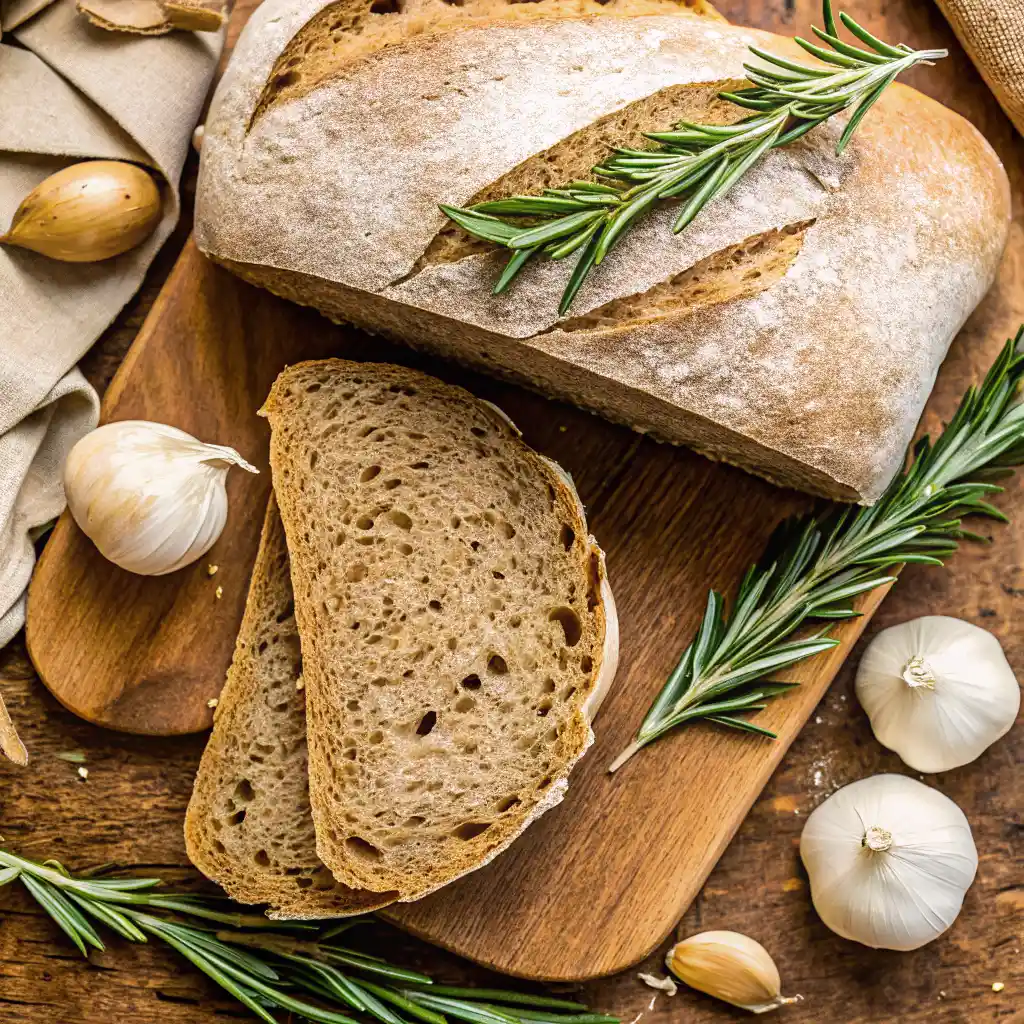
Rustic Rosemary Garlic Bread
Equipment
- Dutch oven with lid
- Mixing bowl
- wooden spoon or dough whisk
- Parchment paper
- Wire cooling rack
Ingredients
- 3 cups bread flour
- 1 1/2 cups warm water (110°F)
- 1 teaspoon fine sea salt or kosher salt
- 1/2 teaspoon active dry or instant yeast
- 2 tablespoons fresh rosemary, finely chopped
- 3 cloves garlic, finely minced
- flour for dusting
Instructions
- In a large bowl, whisk together flour, salt, yeast, rosemary, and garlic. Add warm water and stir until a shaggy dough forms with no dry flour remaining.
- Cover bowl tightly and let dough rise at room temperature for 8–18 hours until doubled, bubbly, and wobbly.
- Place a 6-quart Dutch oven with lid in the oven. Preheat to 450°F (232°C) for at least 30 minutes.
- Turn dough onto a floured surface. Gently fold edges inward to form a loose ball. Place on parchment paper, dust lightly with flour, and rest 30 minutes.
- Transfer dough (with parchment) into hot Dutch oven. Cover and bake for 30 minutes.
- Remove lid and bake for an additional 10–15 minutes until crust is deep golden brown.
- Remove bread and cool on a wire rack for at least 45 minutes before slicing.