
In the vast world of cookies, the Coconut Macaroon occupies a special throne. It is not trying to be a complex French macaron with its fussy almond flour and temperamental feet. No, the macaroon is bold, rustic, and unapologetically straightforward. It is a celebration of texture: a jagged, golden-brown exterior that shatters slightly when you bite into it, revealing a dense, moist, and chewy coconut center.
When dipped in a pool of dark, glossy chocolate, this humble mound of coconut transforms into a confection that rivals anything you would find in a high-end bakery.
Whether you are a die-hard coconut enthusiast or just looking for a gluten-free dessert that doesn’t taste like “diet food,” this recipe is your answer. We are ditching the dry, crumbly versions of the past and embracing a method that guarantees a perfect chew every single time.
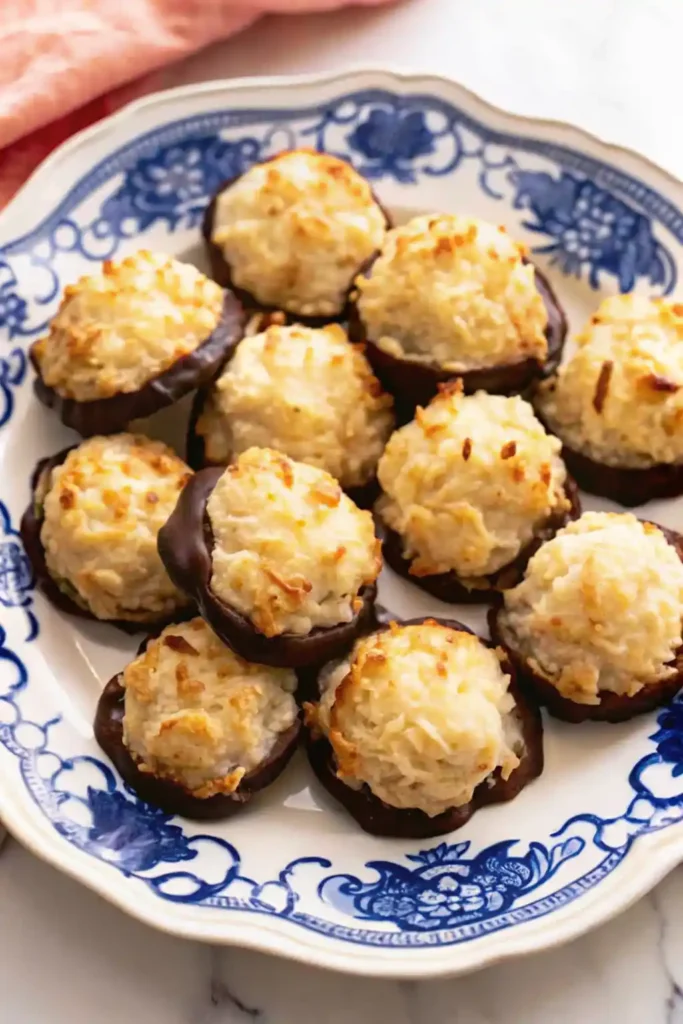
Why This Recipe Works
Many macaroon recipes suffer from two common pitfalls: they either spread into flat, greasy puddles in the oven, or they turn out dry and stiff. This recipe solves both issues through a careful balance of ingredients and technique.
- The Egg White Lift: By whipping egg whites to stiff peaks before folding them in, we introduce air and structure. This ensures the cookies stand tall and have a light, fluffy interior rather than a dense, heavy brick-like consistency.
- Moisture Retention: The ratio of sweetened condensed milk to coconut is calculated to bind the cookies effectively without making them overly wet.
- Naturally Gluten-Free: With no flour required, these are safe for your gluten-sensitive friends and family without needing any strange substitutions.
Ingredients: Simplicity is Key
You only need a handful of ingredients to make these, so let’s ensure you are using the right ones.
1. Sweetened Shredded Coconut
This is the backbone of the cookie. You want the standard bag of sweetened shredded coconut found in the baking aisle.
- Avoid: Unsweetened flakes or desiccated coconut. These are too dry and will result in a hard, crumbly cookie. The sugar in the sweetened coconut helps with the caramelization and the “chew factor.”
2. Sweetened Condensed Milk
This acts as the glue. It provides sweetness and creamy richness that binds the coconut shreds together.
- Note: Do not confuse this with evaporated milk! They are completely different products. You need the thick, syrupy consistency of condensed milk.
3. Egg Whites
This is the secret weapon. While some recipes just dump unbeaten egg whites in, taking the time to whip them creates a superior texture. It lifts the heavy coconut mixture, giving it a bakery-style dome shape.
4. Flavor Enhancers
Vanilla extract adds a warm background note, and a generous pinch of salt is absolutely critical to cut through the intense sweetness of the coconut and condensed milk.
5. Semi-Sweet Chocolate
This is technically optional, but highly recommended. The bitterness of semi-sweet or dark chocolate provides the perfect counterpoint to the sweet coconut.
The Technique: How to Get the Perfect Texture
Making macaroons is easy, but the method matters. Here is how we ensure success.
The Whip
When beating your egg whites, ensure your bowl and beaters are completely grease-free. Any trace of yolk or oil will prevent the whites from reaching stiff peaks. You are looking for glossy white peaks that stand straight up when you lift the beater—not soft curves that flop over.
The Fold
This is the most delicate part of the process. You have a heavy mixture (coconut and condensed milk) and a light mixture (egg whites).
- Add the whites to the coconut bowl.
- Use a spatula to cut through the center and fold the bottom over the top.
- Be gentle! You want to incorporate the whites without deflating all the air you just beat into them. Stop mixing as soon as no white streaks remain.
The Scoop
Use a mechanical cookie scoop (about 1.5 tablespoons) to pack the mixture. This ensures every cookie is the same size, which means they will bake evenly. If you don’t have a scoop, two spoons work, but try to keep them uniform.
Baking and Cooling
Bake these at 325°F (160°C). A lower temperature allows the inside to set before the outside burns. You are looking for a specific color cue: the tips of the coconut shreds should be deeply golden brown, and the bottoms should be caramelized.
Crucial Step: Let them cool completely on the baking sheet. When they first come out of the oven, they are soft and fragile. As they cool, the condensed milk hardens, setting the cookie structure. If you try to move them while hot, they will fall apart.

The Chocolate Dip
Once your cookies are cool and sturdy, it’s time to dress them up. Melt your chocolate in the microwave in 30-second intervals, stirring in between to prevent burning.
- The Dip: Dip the bottom half of the macaroon into the chocolate, letting the excess drip off.
- The Drizzle: For a professional look, use a fork to drizzle leftover chocolate over the tops.
- The Set: Place them back on parchment paper. If your kitchen is warm, pop the tray in the fridge for 10 minutes to snap the chocolate.
Frequently Asked Questions
Why did my macaroons spread? This usually happens if the coconut mixture had too much liquid or if the egg whites were under-whipped. Ensure you measure your condensed milk accurately (don’t just eyeball it!).
Can I make these dairy-free? Yes! You can find sweetened condensed coconut milk in many stores now. It works beautifully and actually enhances the coconut flavor. Just ensure you use dairy-free chocolate for dipping.
How do I store them? Moisture is the enemy of a crisp crust, but the friend of a chewy center. Store them in an airtight container at room temperature for up to a week. If you live in a very humid climate, they may soften faster.
Can I freeze them? Absolutely. These freeze exceptionally well. Place them in a freezer-safe container separated by wax paper. They will keep for up to 3 months. You can eat them straight from the freezer for a chewy, cold treat!
Conclusion
These Coconut Macaroons are the definition of high reward for low effort. With just a few minutes of mixing, you get a dessert that looks elegant, tastes incredible, and satisfies even the strongest sweet tooth. Whether for a holiday cookie swap, a Passover treat, or a Tuesday afternoon pick-me-up, this recipe is one you will return to again and again.
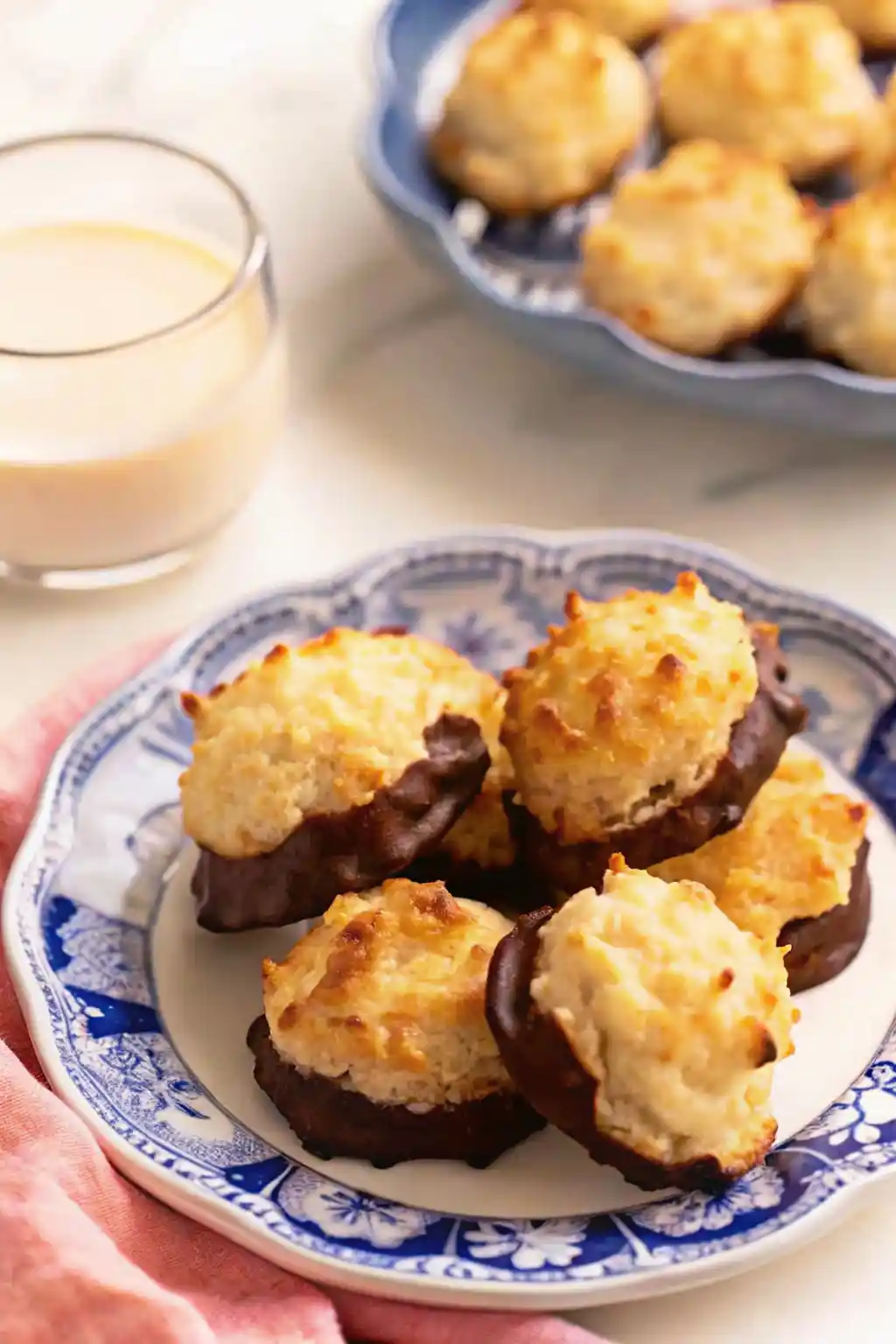
The Best Coconut Macaroons
Equipment
- Large mixing bowl
- clean dry mixing bowl for whites (glass or metal)
- electric mixer or whisk
- Spatula
- cookie scoop (1½ tbsp) or spoons
- Baking sheets
- Parchment paper
- microwave-safe bowl (for melting chocolate, optional)
Ingredients
- 14 oz sweetened shredded coconut (about 396 g)
- 2/3 cup sweetened condensed milk (about 160 ml)
- 1 tsp vanilla extract
- 1/2 tsp salt
- 2 large egg whites, room temperature
- 6 oz semi-sweet chocolate chips or chopped chocolate (optional, for dipping)
Instructions
- Preheat the oven to 325°F (160°C). Line two large baking sheets with parchment paper.
- In a large mixing bowl, stir together the shredded coconut, sweetened condensed milk, vanilla extract, and salt until evenly combined.
- In a separate clean, dry bowl, beat the egg whites on high speed with an electric mixer until stiff, glossy peaks form (about 2–4 minutes).
- Gently fold the whipped egg whites into the coconut mixture using a spatula. Cut through the center and fold without deflating — stop when no white streaks remain.
- Use a 1½ tablespoon cookie scoop (or two spoons) to pack and drop mounds of mixture onto the prepared baking sheets, spacing about 1 inch apart.
- Bake one sheet at a time in the preheated oven for 20–25 minutes, or until the tops and tips of the coconut are deeply golden brown.
- Allow the macaroons to cool completely on the baking sheet — they will firm up as they cool. Do not move while hot.
- (Optional) Melt the chocolate in 30-second microwave bursts, stirring between bursts until smooth. Dip the bottoms of cooled macaroons into the chocolate and return to parchment to set. Refrigerate 10 minutes if your kitchen is warm.