
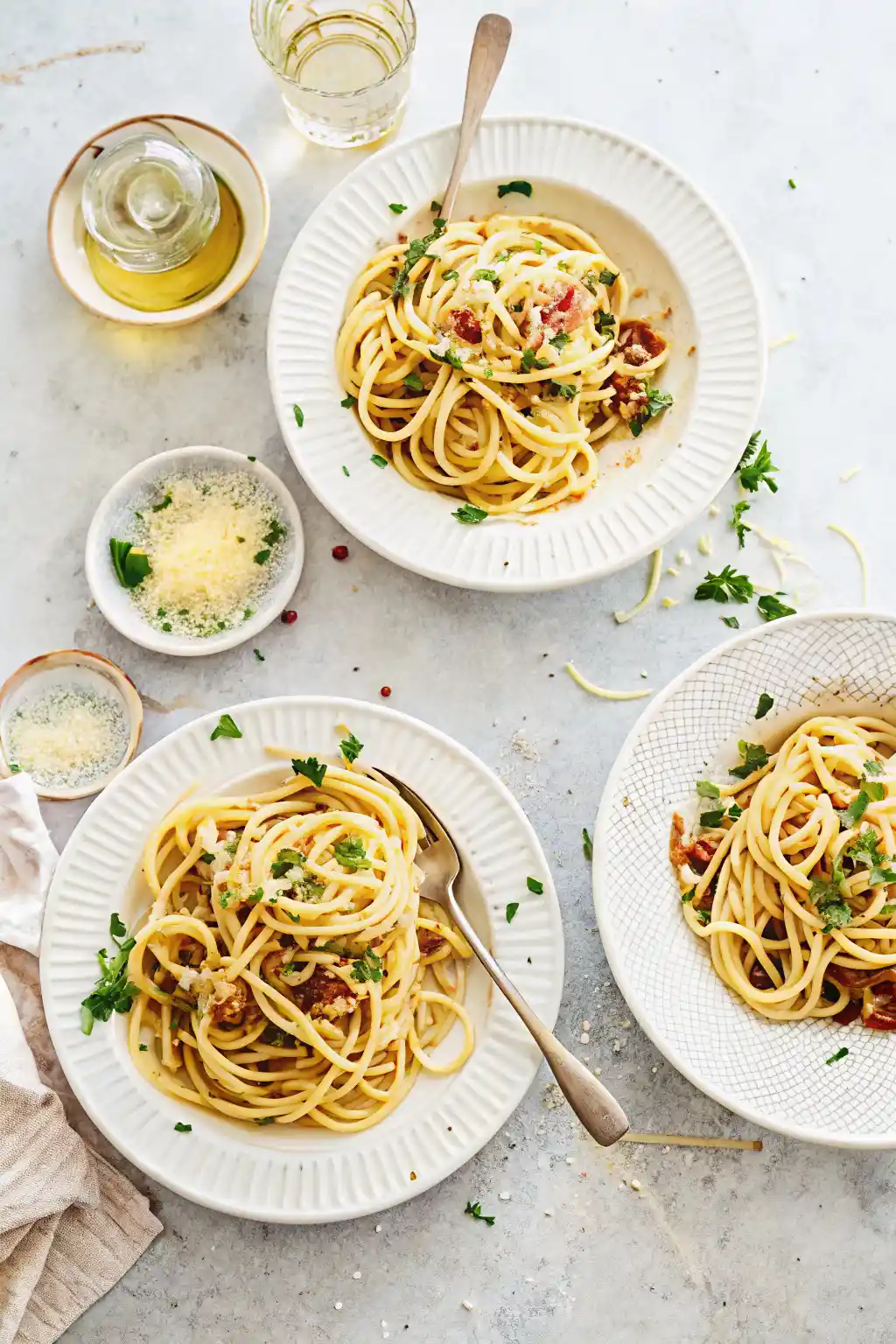
If there is a “Mount Rushmore” of Italian pasta dishes, Carbonara sits front and center. It is the ultimate comfort food: a tangle of al dente noodles coated in a luxurious, silky sauce, studded with crispy bits of cured pork and clouds of salty cheese.
But Carbonara is also a dish that is frequently misunderstood. Too many recipes rely on heavy cream to achieve that signature richness, resulting in a sauce that is heavy, cloying, and frankly, not authentic.
The truth? You don’t need cream. You just need chemistry.
This guide will teach you how to make the best Pasta Carbonara of your life using the traditional Roman method—relying on the magic of eggs, cheese, and pasta water to create a velvety emulsion that coats every single strand. It is ready in 30 minutes, uses ingredients you likely have in your fridge, and tastes better than any restaurant version you have ever paid for.
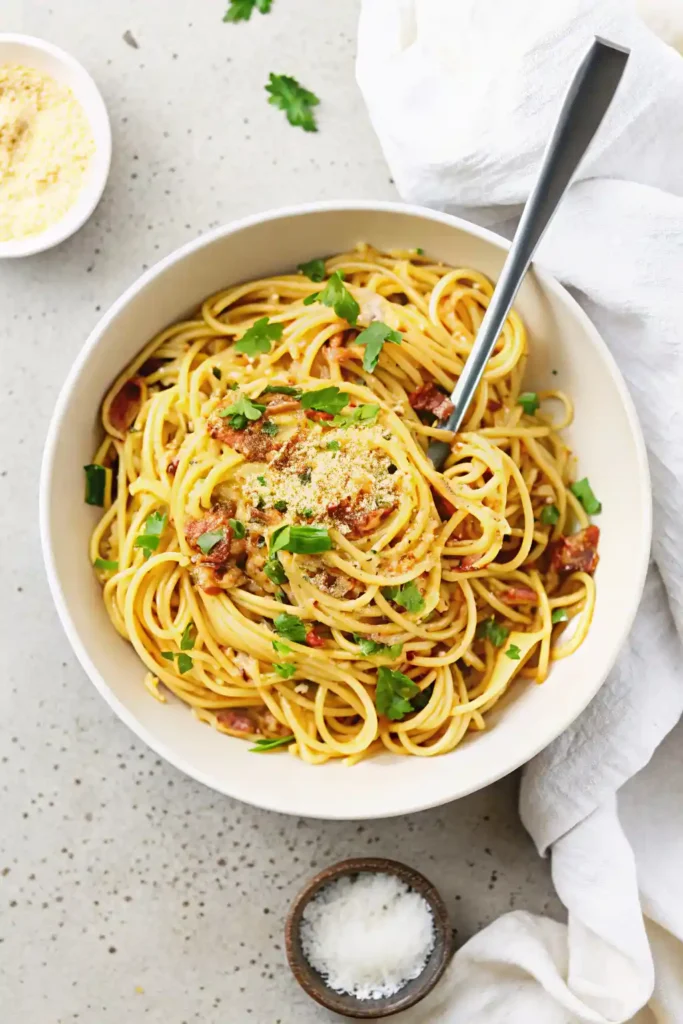
Why This Recipe Works
Making Carbonara can be intimidating. We have all heard the horror stories of “scrambled egg pasta.” This recipe is designed to eliminate that fear entirely using a specific, fail-proof technique.
- The Tempering Trick: Instead of dumping raw eggs directly onto hot pasta (which risks scrambling), we whisk hot starchy pasta water into the egg mixture first. This gently raises the temperature of the eggs, creating a stable, creamy sauce base that is ready to bond with the noodles.
- The Bacon Hack: We bake the bacon in the oven. This ensures perfectly even crispiness without the mess of grease splattering all over your stovetop.
- The Yolk Ratio: By using more egg yolks than whole eggs, we increase the fat content and richness of the sauce without adding dairy.
Ingredients: The Holy Quartet
Authentic Carbonara relies on four pillars: Pasta, Pork, Eggs, and Cheese. Since the list is short, quality matters.
1. The Pork: Bacon vs. Guanciale
- Traditional: Guanciale (cured pork jowl). It has a funky, deep flavor and a high fat content.
- Accessible:Thick-Cut Bacon. While not strictly traditional, high-quality smoked bacon is delicious and readily available. This recipe uses bacon for accessibility, but if you can find guanciale or pancetta at your butcher, feel free to swap it in!
- Tip: If using bacon, try to find “unsmoked” or lightly smoked varieties to mimic the Italian flavor profile closer.
2. The Cheese: A Tale of Two Milk Types
For the most complex flavor, use a 50/50 blend:
- Pecorino Romano: A sheep’s milk cheese that is sharp, salty, and aggressive.
- Parmigiano Reggiano: A cow’s milk cheese that is nutty and mellow. Combined, they give you the perfect balance of salt and savoriness. Always grate your cheese fresh—pre-grated tub cheese has anti-caking agents that will make your sauce gritty.
3. The Eggs
This recipe uses a specific ratio of 3 egg yolks to 1 whole egg. The whites are mostly water and protein, while the yolks are pure fat and emulsifiers. This yolk-heavy blend is the secret to a sauce that looks like heavy cream but tastes significantly lighter and more flavorful.
4. The Pasta
Long noodles are non-negotiable here. Spaghetti, Bucatini, or Linguine are the best choices. Bucatini is particularly excellent because its hollow center captures even more of that delicious sauce.
The Technique: How to Avoid “Scrambled Eggs”
The only “hard” part of Carbonara is the heat management. Here is the science of how we get it right.
Step 1: The Oven Bacon
Preheat your oven to 400°F (200°C). Lay your bacon strips on a baking sheet (or a rack set over a sheet). Bake for 15-20 minutes until deeply golden and crisp.
- Why oven? It frees up your hands to focus on the pasta and cheese, and it renders the fat slowly and evenly. Once cool, chop it into chunky, bite-sized pieces.
Step 2: The Base Mixture
In a large mixing bowl (large enough to eventually hold all the pasta), whisk together your egg yolks, whole egg, grated Parmesan, grated Pecorino, and a generous amount of freshly cracked black pepper.
- Note: Do not add salt yet! The cheese and bacon are very salty.
Step 3: The Pasta & The Water
Boil your pasta in salted water until al dente. Before you drain it, scoop out about 1 cup of starchy pasta water. This cloudy liquid is liquid gold—it contains the starch needed to emulsify the sauce.
Step 4: The Temper (Crucial Step)
While whisking your egg mixture constantly, slowly drizzle in about 1/3 to 1/2 cup of that hot pasta water.
- What is happening? You are bringing the eggs up to temperature gradually. If you threw hot pasta on cold eggs, they would shock and scramble. By tempering them, you create a warm, creamy slurry that is safe to mix.
Step 5: The Toss
Dump the hot, drained pasta directly into the bowl with the egg mixture. Using tongs, toss vigorously. The residual heat of the pasta cooks the eggs just enough to thicken them into a sauce. If it feels too tight or sticky, splash in a little more hot pasta water until it looks glossy and loose. Toss in your bacon and fresh parsley.
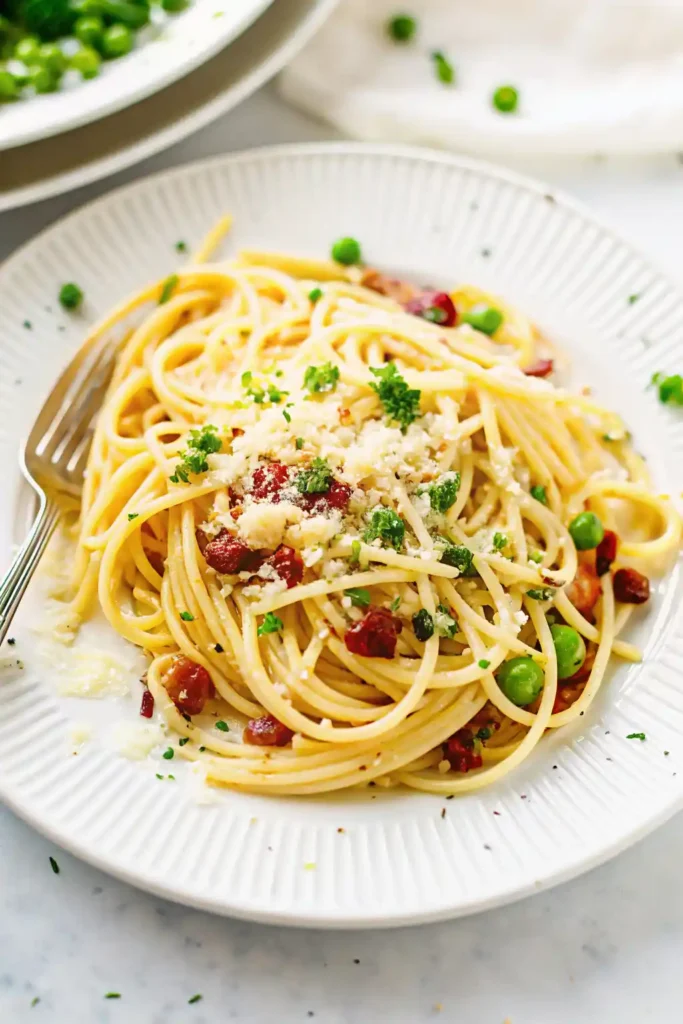
Variations and Add-Ins
While purists might frown, this is your dinner. Here are a few ways to customize it:
- Peas: A handful of frozen peas added to the boiling pasta water in the last 2 minutes adds a pop of sweetness and color.
- Garlic: Whisk a small clove of grated garlic into the egg mixture for an aromatic kick.
- The “Gloss” Finish: Stir in a tablespoon of unsalted butter at the very end. It’s not traditional, but it adds an undeniable sheen and richness.
Frequently Asked Questions
Can I reheat Carbonara? Truthfully? No. Carbonara is a dish of the moment. If you reheat it, the eggs will fully cook and turn into a greasy, scrambled mess. If you must, do it gently in a skillet over very low heat with a splash of water, but fresh is always best.
My sauce is grainy. What happened? This usually means the cheese wasn’t grated finely enough, or the pasta was too hot and started to cook the outer layer of the cheese proteins too fast. Next time, use the smallest holes on your box grater (the “star” side).
Is it safe to eat raw eggs? The eggs in this recipe are not technically raw by the time you eat them. The heat from the boiling pasta and the starchy water cooks the eggs to a temperature that thickens them (around 160°F), which is generally considered safe. If you are immunocompromised, you can use pasteurized eggs.
Conclusion
Once you master this method, you will never look at a jar of Alfredo sauce the same way again. Real Pasta Carbonara is a testament to the magic of Italian cooking: taking the simplest, humblest ingredients and turning them into something fit for royalty. It is fast enough for a Tuesday night, but elegant enough for a Saturday dinner party.
The Best Pasta Carbonara

Equipment
- Large pot
- Large mixing bowl
- tongs
- Sheet pan
- Whisk
- box grater or microplane
Ingredients
- 12 oz thick-cut bacon (or guanciale or pancetta)
- 1 lb dried spaghetti, bucatini, or linguine
- 3 large egg yolks
- 1 large whole egg
- 1/2 cup freshly grated Parmesan cheese
- 1/2 cup freshly grated Pecorino Romano cheese
- freshly ground black pepper (generous amount)
- 1/4 cup fresh parsley, chopped (optional)
- salt (for pasta water)
Instructions
- Preheat the oven to 400°F (200°C). Arrange bacon on a baking sheet and bake for 15–20 minutes until crisp. Drain on paper towels and chop.
- Bring a large pot of salted water to a boil. Add pasta and cook until al dente.
- While pasta cooks, whisk together the egg yolks, whole egg, Parmesan, Pecorino, and plenty of black pepper in a large mixing bowl.
- Before draining the pasta, reserve 1 cup of hot, starchy pasta water.
- Slowly drizzle about 1/3 cup of the hot pasta water into the egg mixture while whisking constantly to temper the eggs.
- Drain the pasta and immediately toss it in the bowl with the egg mixture. Use tongs to vigorously coat the pasta, forming a creamy sauce. Add more pasta water if needed.
- Fold in the crispy bacon and chopped parsley (optional). Serve immediately with extra cheese and pepper.